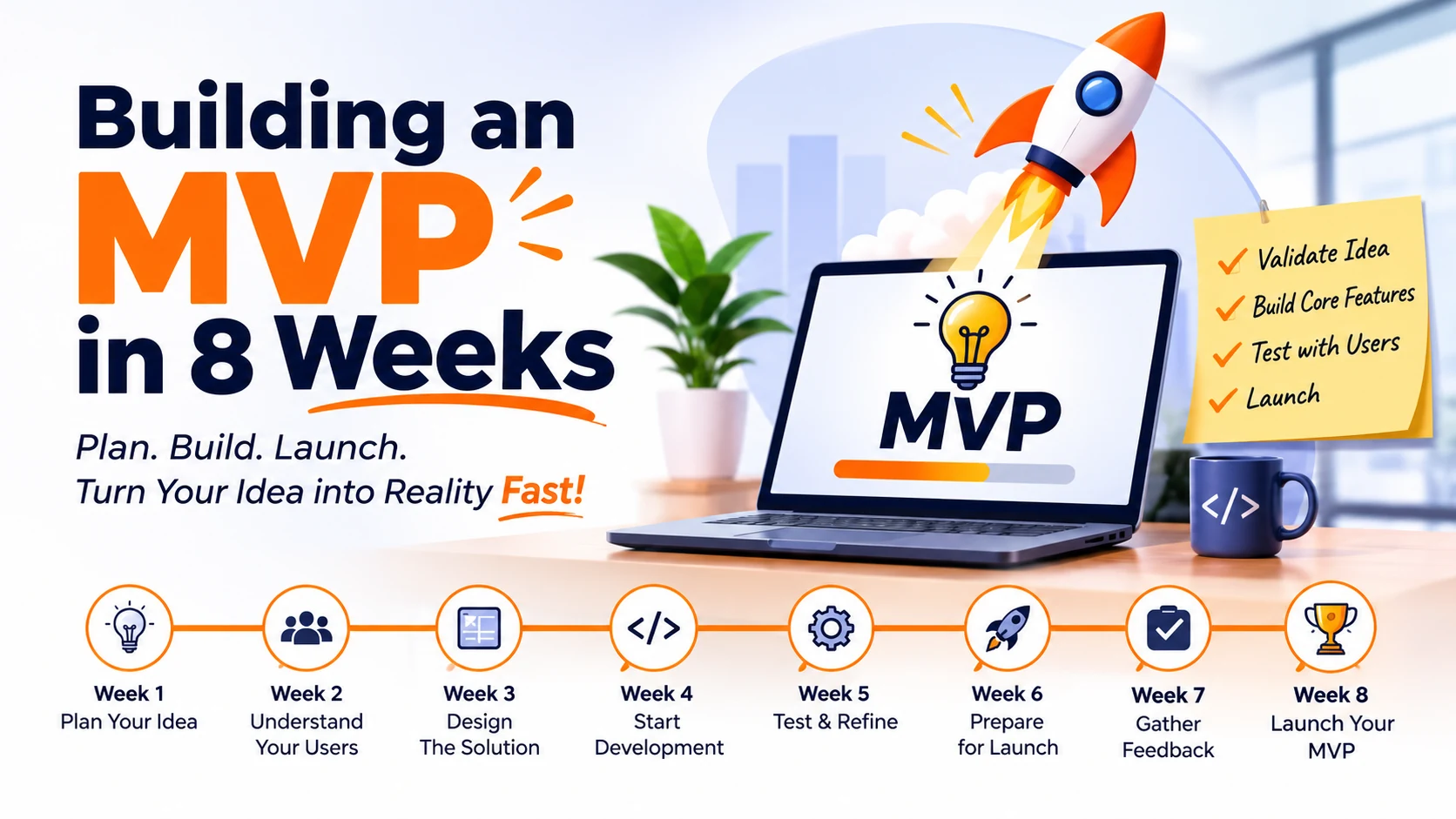
Building an MVP in 8 Weeks: A Practical Playbook for Founders
Scope ruthlessly, ship weekly and measure everything. Here is the exact sprint plan we use to take an idea to a working product in two months.
Read article
Learn how MVP development helps startups validate ideas, reduce initial development costs, and launch software products faster. Discover the MVP development process, essential features, and how Binary Beez helps turn your idea into a scalable digital solution.
Every successful digital product starts with an idea. But turning that idea into a working application requires the right strategy, technical expertise, and a clear understanding of your customers.
For startups and growing businesses, building a complete product from day one can be expensive and time-consuming. So, how can you test your idea without investing all your resources upfront?
The answer is a Minimum Viable Product (MVP).
An MVP helps you launch a simplified version of your product with the essential features needed to solve a real problem. You can gather feedback from real users, validate your idea, and improve your product based on what you learn.
At Binary Beez, we help businesses turn digital ideas into practical software solutions. Whether you are planning a SaaS platform, a web application, or a mobile app, the right MVP strategy can help you take the first step with confidence.
A Minimum Viable Product is the first usable version of a software product that includes only the essential features needed to deliver value to its users.
Instead of building every feature you can imagine, you focus on solving one important problem effectively.
For example: Imagine you want to build an online appointment booking platform.
Your first version might include:
Advanced analytics, automated reminders, and additional integrations can be added later when they become necessary.
The goal is simple: launch a useful product, understand your users, and improve it over time.
An idea that sounds promising may not always solve a problem customers are willing to pay to address.
An MVP allows you to test your assumptions with real users before committing to a larger development budget.
You can discover which features people value, what needs improvement, and whether your product solves a genuine problem.
Building a feature-rich application from the beginning can require a significant investment.
An MVP keeps the initial scope focused on essential functionality. This helps you prioritize your budget and avoid spending money on features that may not be necessary.
You can expand the product as your business needs and customer feedback become clearer.
Spending too much time developing a complete product can delay valuable customer feedback.
An MVP gives you an opportunity to introduce your solution to the market sooner and learn how people actually use it.
These insights can help you improve the product and make better decisions about future development.
A working product provides more useful feedback than assumptions alone.
By observing user behavior, collecting feedback, and measuring engagement, you can identify what customers need most.
This allows you to make informed improvements instead of adding features based only on guesswork.
An MVP should be small, but it should not be carelessly built.
Good software architecture, maintainable code, appropriate security, and clear documentation make it easier to improve the application as your business grows.
The goal is to start with essential features while keeping future development in mind.
Building an MVP becomes more manageable when you follow a structured development process.
Before writing code, identify the problem your product is designed to solve.
Ask yourself:
Clear answers help you establish the right direction for your project.
Your product should be designed for a specific group of users.
Research your audience, understand their challenges, and study existing solutions. Speaking with potential customers can also help you identify unmet needs.
The better you understand your users, the easier it becomes to prioritize the right features.
Create a list of all the features you would like to include, then divide them into three groups.
This approach keeps your first release focused and helps prevent unnecessary complexity.
Before development begins, plan how users will navigate and interact with your application.
Create wireframes, map important user journeys, and establish a clear interface structure.
A simple and intuitive user experience helps users understand your product and complete important tasks without confusion.
The technology stack should match your product requirements, budget, and long-term goals.
Depending on your idea, you might need:
There is no single technology stack that works for every project. The right choice depends on your specific requirements.
Instead of waiting until the entire product is finished, divide development into smaller stages.
Each stage should have clear objectives, working features, and opportunities for review.
At Binary Beez, our development approach emphasizes transparent progress and regular sprint demonstrations, allowing clients to review work and provide feedback throughout the process.
This helps keep development aligned with business expectations.
Testing is essential, even for a small product.
Before launch, verify that the main features work correctly and that users can navigate the application easily.
Important areas to test include:
A focused MVP should still provide a reliable and secure experience.
Once the product is ready, introduce it to your intended audience and gather feedback.
Track metrics that reflect your business goals, such as user engagement, sign-ups, conversions, repeat usage, and customer retention.
Use these insights to decide which improvements should come next.
Remember, an MVP is not the final destination. It is the starting point for building a better product.
The cost of MVP development depends on the complexity of your idea, the number of features, integrations, design requirements, and technical requirements.
A simple application with a limited set of features will generally require less work than a complex SaaS platform with multiple user roles and third-party integrations.
Before starting your project, consider:
Starting with a clearly defined scope helps you make better investment decisions.
Binary Beez offers startup-oriented development approaches, including fixed-price MVPs and phased development options. The right approach depends on your project requirements and budget.
Even a promising product idea can face challenges when the development process is not planned properly.
Avoiding these mistakes can help you build a stronger foundation for your product.
Turning an idea into a working product requires more than technical skills. It requires clear communication, thoughtful planning, and an understanding of your business goals.
Binary Beez helps businesses explore and build custom digital solutions, including web applications, SaaS products, MVPs, APIs, and integrations.
Our approach focuses on:
Whether you are launching a startup or expanding an existing business, the right development partner can help you turn your idea into a practical digital product.
You do not need to build an entire platform before testing your idea.
With the right MVP strategy, you can focus on essential features, gather real customer feedback, and make informed decisions about your product's future.
Whether you are planning a SaaS platform, a custom web application, or a new digital service, the first step is defining what you want to achieve.
Have a software idea? Let's build your first version together.
Contact Binary Beez to discuss your requirements, explore development options, and plan your next steps.
Visit Binary Beez to learn more about our software development services.
Our team can help you plan, build and grow – book a free consultation today.
Get in touchScope ruthlessly, ship weekly and measure everything. Here is the exact sprint plan we use to take an idea to a working product in two months.
Read articleYou do not need a big budget to rank locally. These seven quick fixes routinely move our clients up the map pack within a month.
Read articleOutdated dependencies, silent errors and expired certificates are ticking clocks. A proactive maintenance plan costs far less than an outage.
Read article